An engine needs to run for a fault check, the bay door is open and the job should only take a minute. It is tempting to call that ventilation sorted. HSE's advice is less relaxed: vehicle exhaust can build up indoors even with doors open, especially when an engine is cold or run intermittently. A catalytic converter is not a guarantee either. [1]
This is established HSE guidance, not a new rule announced this week. It matters whenever a petrol or diesel vehicle is run inside for testing, servicing or inspection. If your workshop never runs combustion engines indoors, this particular exhaust problem is different, though your other workplace hazards still need their own controls.
What is getting into the workshop?
Petrol-engine exhaust can contain carbon monoxide, a poisonous gas you cannot see or smell. Diesel exhaust brings its own health risks, including a long-term lung cancer risk. Fumes can also irritate eyes and breathing. The person by the tailpipe is not the only one exposed: nearby staff may breathe the same workshop air. [1]
An open door can help general ventilation, but HSE says it cannot be relied on to control exhaust from a vehicle running indoors. Nor should you count on the catalyst, particularly with a cold or intermittently running engine. The practical distinction is between letting fumes drift out eventually and capturing them at the tailpipe before they spread. [1]
Start with the job, not the hose
Can the engine-running part of the test be done outside safely? Can the run be shortened, or can other people be kept away? HSE's vehicle-exhaust guidance starts with reducing exposure, including avoiding unnecessary indoor diesel running. Do not move a vehicle outside if that simply creates a traffic or public-safety problem; plan a suitable place and method. [1][2]
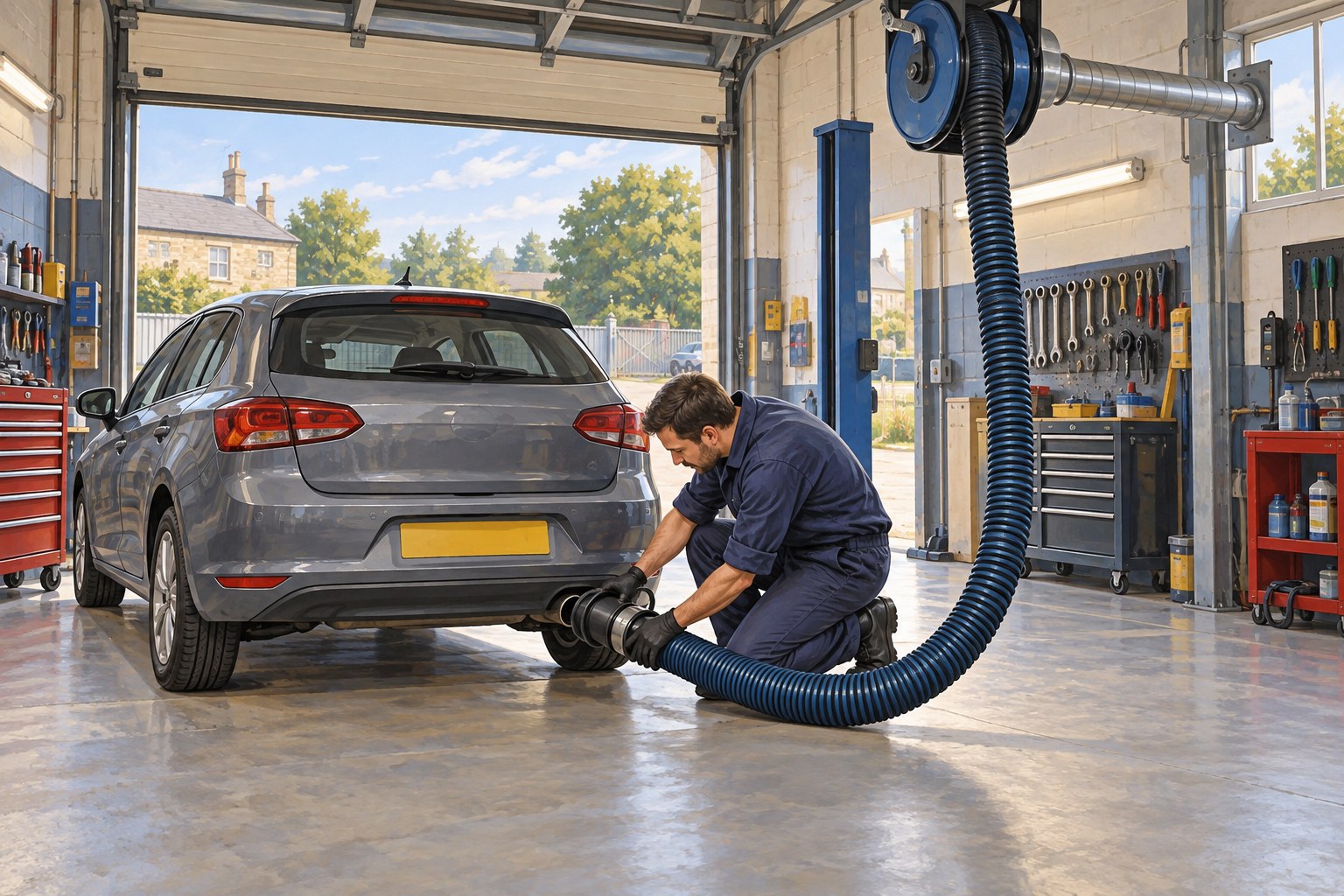
If static running indoors is needed, HSE's workshop control sheet calls for a tailpipe exhaust extraction system. Connect the hose and switch the system on *before* starting the engine. The system should take fumes to a safe outdoor discharge, rather than dumping them back into the building or near another opening. Check that the connection fits the vehicle and stays secure for the actual test. [2]
Make sure extraction really extracts
A hose hanging nearby is not the same as a working system. HSE's control sheet says to check the local exhaust ventilation before use, look for leaks, wear or damage before each job, and inspect ducting for damage. If the extraction is faulty, stop that work until it is repaired. That is a better time to discover a loose coupling than halfway through a diagnostic session. [2]
Where the extraction system is local exhaust ventilation (LEV), the employer must arrange a thorough examination and test by a competent person at least every 14 months. HSE says to act on the findings and keep the examination records for at least five years. That periodic test does not replace the everyday check at the bay. [2]
What I would check this week
This is my practical checklist, drawn from the HSE guidance, not a substitute for your own COSHH assessment. [2]
1. List the jobs that involve static engine running indoors, including quick diagnostics that are easy to overlook.
2. Decide which runs can be avoided, moved to a suitable outdoor spot or kept shorter.
3. At each indoor-running bay, check that the correct tailpipe connection, hose and extraction are available and that fumes discharge safely outside.
4. Make "hose connected, extraction on, then engine start" the sequence everyone follows. If the kit fails, pause the run until it is fixed.
5. Find the latest LEV examination record where LEV applies, note any repairs due, and make the pre-use check part of the normal job routine.
The open bay door is useful for many things. As an exhaust-fume strategy on its own, it leaves far too much to chance. The small win is making capture at the tailpipe as automatic as putting the key in. [1][2]