Start with the hands, not the job card
“Only used it for a bit” is a wonderfully elastic unit of time. It can mean one stubborn fastener or most of an afternoon. Neither description gives a garage owner much to work with.
HSE identifies motor vehicle repair among industries where regular use of vibrating tools can matter. Its examples include impact wrenches, grinders and sanders. Frequent exposure can cause permanent harm, including hand-arm vibration syndrome, usually shortened to HAVS. [1] That is a reason to understand the work, not a reason to assume every short tool use is dangerous.
This is established Great Britain guidance, checked on 15 October 2026, not a new October requirement. HSE explains the employer's duty to assess vibration risks and identify ways to remove or reduce them under the Control of Vibration at Work Regulations 2005. [1] Northern Ireland is outside this article's regulatory scope.
What caught my attention is how ordinary the starting point can be. You do not need to begin by guessing a daily allowance for every tool in the drawer. I would begin with the people who use them and the jobs they actually do.
My suggestion is to pick a representative job and ask a useful question: when are the hands in contact with equipment that is vibrating? Time spent finding a part, moving a vehicle or discussing the next step should not silently become powered-tool time just because it sits inside the same booking.
Equally, I would not let a series of small jobs disappear from the picture. If the same person reaches for different vibrating tools across the day, the assessment should follow that person rather than stop at each job-card boundary.
Measure the right time and use the right information
HSE's risk-assessment guidance calls for tool and user information, representative vibration data and the time hands are actually in contact while equipment vibrates. It calls that exposure duration “trigger time”. Where several tools or processes are used in a day, information is needed for each. Manufacturer figures should represent the real application; some declared data can understate workplace vibration. [2]
That does not make the booking duration useless. It is simply answering a different question. The diary helps plan capacity. An exposure assessment needs information about the actual work. My advice is to avoid copying one number into the other because it happens to be convenient.
I would make the first observation openly, with the person doing the job. Explain that the aim is a better working method, not a speed contest. A neat but unrealistic estimate is less useful than an honest account of where the tool is running and where it is not.
For the equipment information, start with the actual make, model and application. If the handbook figure leaves you unsure, ask the supplier whether it represents your use. That is my suggested purchasing and assessment conversation, not a claim that the supplier can certify your whole workshop from a phone call.
HSE's calculator combines vibration magnitude and duration, including contributions from different tools. It identifies the exposure action value as 2.5 m/s² A(8), or 100 points, and the exposure limit value as 5 m/s² A(8), or 400 points. [3] A(8) expresses daily exposure normalised to an eight-hour reference period. These are exposure values, not a universal number of safe minutes.
My view is that a calculator is useful when its inputs deserve belief. A precise-looking result built from a guessed duration and an unsuitable tool figure is still a guess in a smart jacket. Use HSE's guidance and competent help where the assessment needs it. This article is not a measurement service or a personalised exposure allowance.
Change the work before buying a promise
HSE recommends considering alternative methods, suitable efficient lower-vibration equipment and maintenance to prevent avoidable increases. At or above the action value, a planned vibration-control programme is required. Its advice also says gloves may keep hands warm but should not be relied on as protection from vibration. [4]
That last point deserves a place in the purchasing conversation. My advice is not to start with a shopping search for a glove that appears to solve the whole issue. Start with the task and ask whether the exposure can be avoided or reduced.
For a garage review, I would separate three decisions. Is this the right method? Is this the right tool for that method? Is the equipment being maintained and used as intended? They are better questions than asking who can tolerate the longest stint.
When replacing equipment, I would compare suitability, efficiency and vibration information together. The lowest attractive figure on a product page is not the entire buying decision. Ask questions before spending, and involve the people who will actually use the equipment.
I would also look at how work is distributed. A proposed change should improve the individual's daily picture, not merely move the same unexamined problem to somebody else. Check the assessment after changing the arrangement rather than assume a rota has settled it.
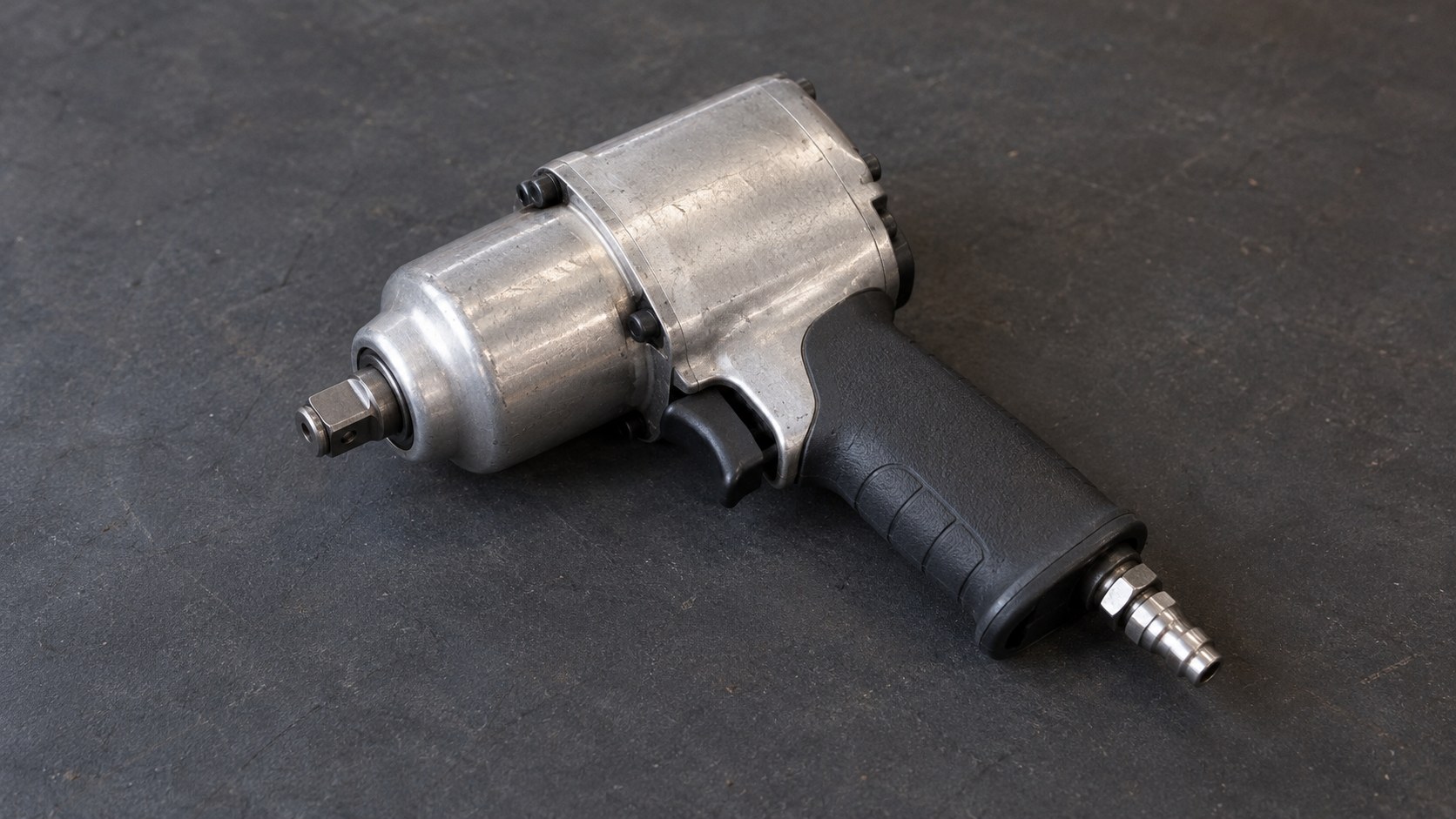
None of this identifies the tool in the photograph as a low-vibration model. The photograph makes no claim about the tool's vibration performance. The useful evidence belongs in the assessment, not in a convincing-looking product photograph.
Make early reporting easier than brushing it off
HSE lists tingling, numbness, reduced feeling, loss of hand strength and finger whitening among possible early signs. It stresses early recognition. [1] Those signs need appropriate attention, not a diagnosis from this article or a joke about someone getting soft.
HSE requires health surveillance where workers are likely to be regularly exposed above the action value despite controls, or are at risk for another reason. A suitable occupational health provider can advise on arrangements. [4]
My practical suggestion is to make the reporting route obvious before somebody needs it. Who should a technician tell? Who arranges the next assessment or professional advice? What happens to the work while the issue is considered? Those are management questions worth answering calmly.
HSE also says routine continual monitoring or logging is not required; employers should survey the work to identify exposure. [1] So I would not confuse a permanent logging ritual with controlling the risk.
For this week's review, I would choose one regular vibrating-tool task, check the actual exposure information with its users and agree a specific improvement or next assessment step. Give it an owner and check whether it happened. If the existing assessment is sound, keep using it and review changes rather than inventing paperwork for today's article.
My take: count the work properly, then make it better. A job card records the customer's job. Your technicians' hands deserve an assessment of their own.