Today's change has a narrow doorway
DVSA published MOT special notice 05-26 on 13 October 2026, with the change effective from 14 October. It applies in England, Scotland and Wales to tests in classes 3, 4, 5 and 7. This article is not guidance for Northern Ireland. [1]
The notice covers ECE-approved LED replacement bulbs, called LEDr, fitted in compatible existing halogen headlamps. It does not cover class 1 and 2 motorcycles, conversions from halogen to HID, or replacement of a whole headlamp with a complete LED unit. [2] ECE approval is the approval described in DVSA's notice, not my verdict on a particular product.
I read the updated manual alongside the notice because this is exactly the sort of announcement that can grow a much bigger headline on its journey to a parts counter. My view: the opportunity is worth understanding, but the word “approved” is doing a proper day's work here.
If your garage tests vehicles in those classes, read the changed section before assessing a conversion today. If you fit bulbs but do not test, the practical question is different: can you establish what the supplied product is actually approved for before recommending it? Those are connected jobs, not interchangeable ones.
There is no need to turn this into a workshop-wide replacement campaign. My advice is to brief the people who test, order lamps or answer upgrade enquiries. A specific enquiry deserves a specific answer. “LED bulbs are fine now” is much too loose.
The sticker is part of the check
DVSA says the manufacturer-issued secure approval sticker must be permanently fixed and readily visible. The notice describes the bulb category, such as H11LEDr, variant, rated voltage, ECE approval number and manufacturer's name, with security features such as a hologram. At MOT, testers check for the sticker; they do not have to look up approval numbers, marks or manufacturers in a database, documentation or records. [2]
The updated manual says the LEDr bulb must be ECE approved for the lamp fitted. It also says lamp units or covers do not have to be dismantled to check whether LED bulbs have been fitted. [3] That is an important limit on the test, not an invitation to improvise a more intrusive inspection.
My practical advice is to keep the fitting conversation separate from the testing instruction. A supplier may need to help the garage identify the right product and headlamp application. That does not turn the MOT into a new paperwork search exercise for the tester.
Before placing an order, I would ask the supplier to explain the product's approved application and how the manufacturer's sticker is provided and fitted. That is my suggested buying check, not an additional DVSA MOT requirement. If the answer is only a bright photograph and an enthusiastic promise, I would pause the order.
I would also avoid treating a garage-made label, a printout of a listing or an invoice description as a substitute for what the notice describes. Keep a customer explanation calm: the approval and its visible identification matter, not how confidently the packaging says “upgrade”.
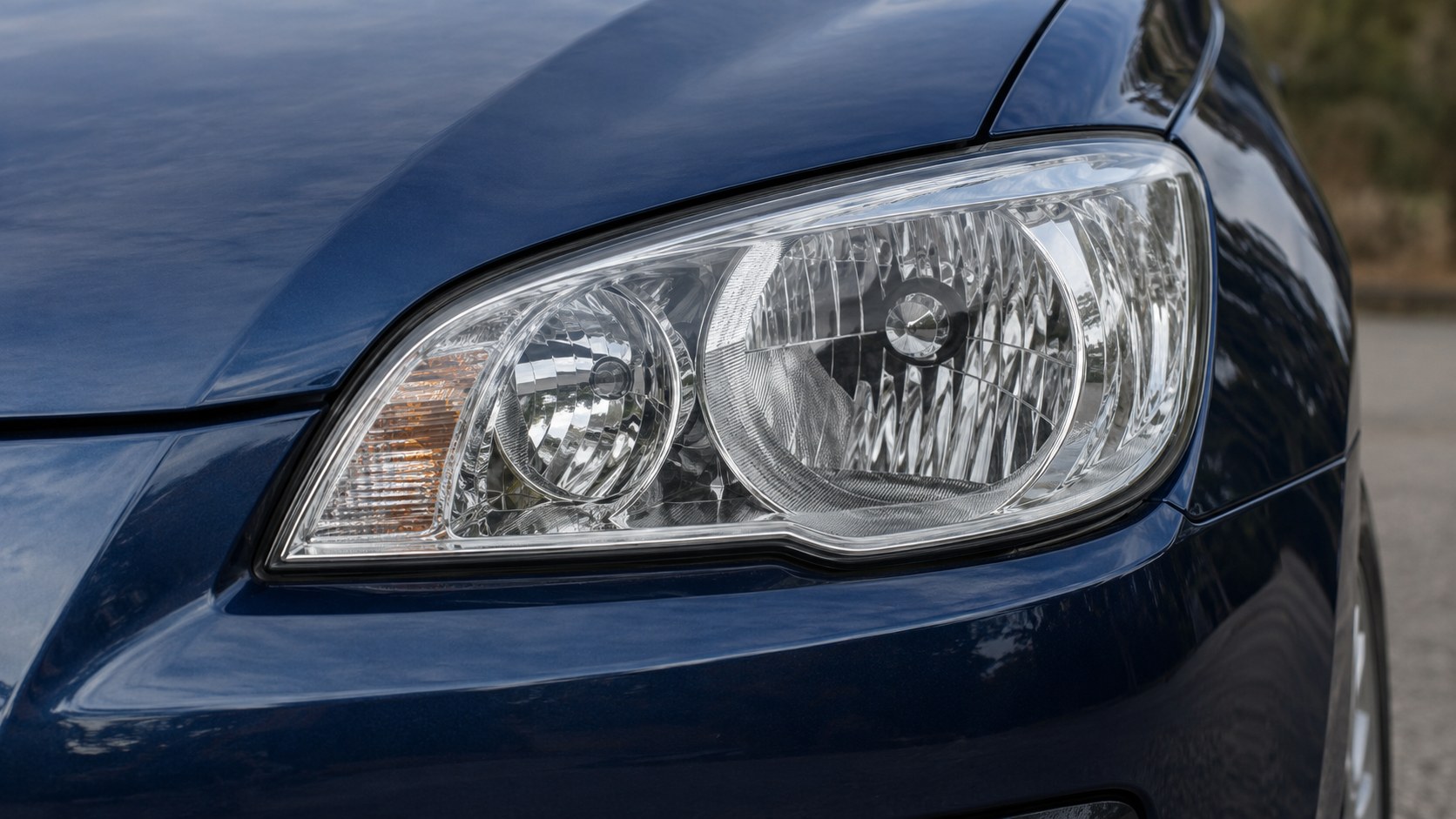
This article does not endorse a bulb, brand or kit. Nor does the feature photograph prove the type or approval of the bulb inside its fictional headlamp. Choosing a particular product requires checking that product, not identifying a familiar-looking lens in a photograph.
Acceptance is not an automatic pass
The manual lists missing, illegible, damaged or tampered-with approval stickers, and stickers that do not correspond to the bulbs fitted, as grounds for rejection. It uses defect 4.1.4(c), “Light source and lamp not compatible”, which is a major defect. [3]
DVSA has also recorded the amendment under the manual's 14 October 2026 updates. [4] So this is today's effective change, not a consultation about something that might happen later.
The rest of the headlamp inspection still applies, including aim. A complete replacement headlamp unit is treated separately under the existing manual: compatibility alone is not a reason to fail it, but the other requirements in section 4 remain relevant. [3] Do not stretch this LEDr notice into a new rule for every lighting conversion.
For reception, my suggested wording is simple: “Some approved replacements can now be accepted. We need to check the installation against the current guidance, and the normal MOT checks still apply.” That leaves room for the actual assessment without sounding as though the garage is dodging the question.
I would not promise a pass before the vehicle is assessed. A customer can arrive with a genuine product and still need a clear explanation of what the inspection found. Equally, a tester should use the current manual rather than reject something purely because yesterday's familiar shorthand said all conversions were out.
Keep any explanation tied to the observed issue. If it is a sticker problem, say so. If another headlamp requirement is the problem, explain that instead. A conversation about “LEDs” in general is less useful than a precise reason the customer can understand.
This is an explanation of a particular MOT change, not a blanket certificate of road legality or compliance with every other requirement. An MOT acceptance rule should not become an all-purpose sales guarantee.
What I would do before the next enquiry
First, I would put the notice and section 4.1.4 of the current manual in front of the testing team. A short shared read is more useful than forwarding a headline with “FYI” and assuming everyone drew the same conclusion.
Second, I would brief whoever buys lighting parts. Ask for product-specific approval information and the manufacturer's sticker arrangements before describing a proposed fitment as suitable. Keep the answer with the job information if that helps your garage explain its recommendation. That record is my business suggestion, not a new mandatory MOT database check.
Third, I would tidy the customer wording wherever the garage discusses conversions. Avoid both extremes: “all LEDs fail” and “LEDs now pass”. Explain the qualified change and let the actual inspection settle the test outcome.
Finally, I would make uncertainty an easy thing to raise. If a product claim, sticker or application is unclear, stop promising and check the authoritative guidance or supplier information. Nobody needs to win a counter argument at the expense of a defensible decision.
My take is that this is useful news for garages willing to be precise. There is an opening for properly supported replacements, and an equally useful reason to challenge vague upgrade claims. The best response is not a brighter sales pitch. It is a clear distinction between the right approved fitment, the tester's defined check and the vehicle's actual result.