An oil change can look perfectly organised on the job card while the small habits around it tell another story. Where does the removed filter go? Where does the rag go? Is the right glove available before the job starts, or whatever happens to be left in the box?
Those are useful workshop questions, not an excuse for another poster nobody reads. HSE warns that frequent or prolonged contact with used engine oil can cause dermatitis and other skin disorders, including skin cancer. It also specifically warns against carrying oily rags in overall pockets, because oil can seep through and reach the skin. [1]
This is established guidance, not a new October rule. I am writing for garage owners and technicians in Great Britain who handle used engine oil during service and repair work. This is a practical prompt to review your own controls, not a medical diagnosis or a complete assessment of every substance in the workshop.
My view: a rag belongs in the planned handling arrangement, not wherever a busy pair of hands parks it. The useful question is how to make the safer method the easy method on an ordinary working day.
Start with the contact, not the glove box
HSE's prevention advice starts with avoiding or reducing contact by changing the task or process. Protective equipment is part of the answer where those measures cannot remove the exposure, not a reason to leave the process untouched. [4]
My suggested first exercise is to walk through one servicing job with the technician doing it. Do not interrupt a safety-critical step. Afterwards, ask where oil can reach skin or clothing during draining, filter removal, transfer and clearing up. Write down the awkward bits, not just the ideal sequence from the procedure.
For example, is the collection equipment ready before work starts? Is there a sensible place for the removed filter? Can the technician reach the supplies without improvising? These are questions to resolve against your equipment instructions and workshop assessment, not a universal oil-change method from me.
Then give each change an owner. A note saying "be more careful" is rather hard to act on. A named person checking the arrangement before the next service is clearer. Ask the technician whether the change actually helps, and keep what works.
HSE also advises keeping protective clothing clean and replacing it as necessary. Barrier creams are not a complete barrier against oil exposure, even where they help with washing contamination off later. [1] A cream dispenser does not settle the question of an oily sleeve.
Choose the actual glove, not just the colour
HSE mentions nitrile gloves as an example that can reduce hand contamination. [1] That is not a blanket approval of every nitrile glove for every oily task.
Its glove-selection guidance says no material protects against every substance indefinitely. Use product information and the particular manufacturer's data, including breakthrough time and degradation, then consider fit, dexterity and other job hazards. Breakthrough is chemical passage through the material, not simply a visible hole. Data for a pure chemical may not describe a mixture. [2]
My practical suggestion is to check the exact product you buy, not a remembered description such as "the blue ones". Ask the supplier to help establish suitability for the substances and task in your assessment. If the answer is vague, keep asking before treating the box as your protection plan.
Once the choice is established, make it usable. Where are the suitable sizes kept? Who orders replacements? Can a newcomer find the right product without asking three people? Keep the manufacturer's use and replacement instructions with the workshop procedure, rather than inventing a universal number of minutes from this article.
HSE's glove guidance also calls for training in correct use and a replacement plan. [2] Its skin-care resources cover careful removal to avoid cross-contamination. [3] A glove is equipment with instructions, not an invisible force field. Let the training include the end of the task, not just putting it on.
Make the wash station part of the job
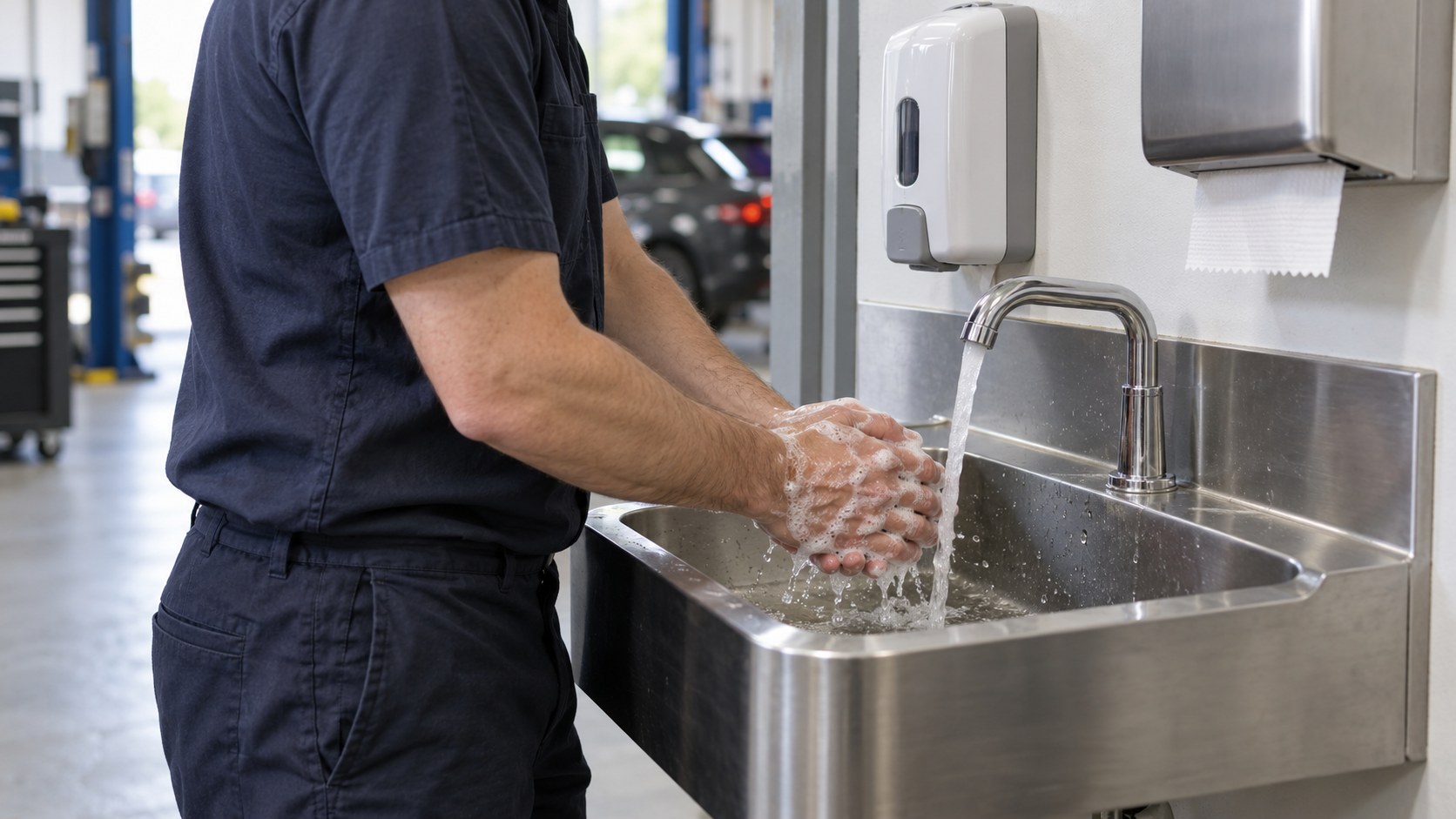
HSE advises promptly washing contamination from skin and drying thoroughly afterwards. Its motor-repair advice says not to use aggressive cleaners or solvents to clean skin. [3][4]
My check would be very ordinary: can someone use the basin now? Are the appropriate cleanser and drying supplies there? Does anybody own replenishing them? A facility that exists on a plan but is inconvenient in practice deserves the same attention as equipment that is always missing when needed.
Do not turn hand washing into a contest in scrubbing. HSE notes that frequent or prolonged wet work can itself cause dermatitis, and recommends suitable mild cleaning products and skin-care arrangements. [4] The aim is to prevent contact and remove contamination properly, not compensate for a poor process with ever harsher cleaning.
HSE's skin-care advice also supports moisturising creams. [3] Keep that advice alongside contact reduction and the right equipment, not instead of them. If you are choosing products or changing arrangements, involve the people who will use them and review the result.
Notice problems early, then review what happened
HSE advises regular skin checks for signs such as dryness, itching and redness, and reporting suspected dermatitis to the employer. [3] Its motor-repair guidance says skin checks can help reveal a lapse in preventive measures; someone who suspects a skin problem should seek advice from their GP. [4]
Nobody needs a colleague diagnosing their hands over the tool chest. What a garage does need is a clear, private route for raising a concern and somebody responsible for reviewing the work arrangements. Keep personal health details out of the job card and public workshop banter.
For this week's practical check, I would ask the person responsible for servicing to confirm four things: the awkward oil-contact steps have been considered, the actual glove choice has supporting information, the wash station is usable, and staff know how to raise a skin concern. That is my suggested starting point, not a substitute for your assessment or any required health-surveillance arrangements.
The opportunity is a more workable routine. The risk is treating familiar oil contact as too ordinary to question. Keeping the floor clean matters. Keeping the oil off the person doing the job deserves a place in the same conversation.