It is easy for a two-post lift to become background furniture. Drive in, swing the arms out, press the button. Then the car is above someone's head. That familiar sequence is exactly why the small checks deserve a moment of attention.
The Health and Safety Executive (HSE) describes a fatal accident in which a car fell from a two-post lift because its arms did not lock and its lifting pads were damaged or missing. HSE also warns that vehicles falling or rolling from poor lifting arrangements are among the main causes of fatal motor vehicle repair accidents. [1][2]
This is not a newly announced lift rule. It is established guidance, checked on 23 September 2026. The useful question for a busy garage is what the person using the lift should check today, and what the competent examiner checks on a different timetable.
Start with the empty lift
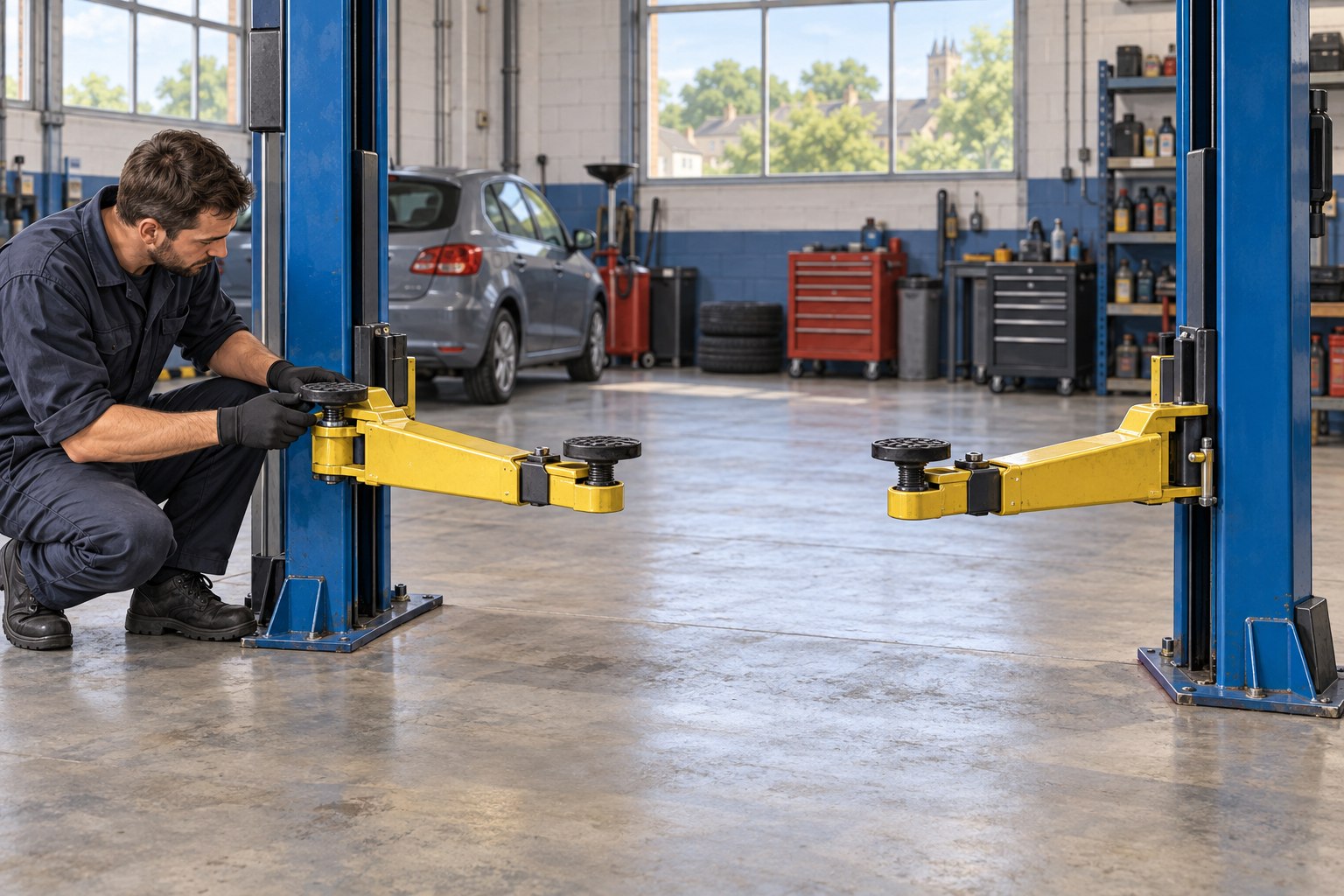
HSE says daily checks on a two-post lift should include the arm locking mechanism, the condition of the support arm rubber mounts and whether the controls work. It says any remaining two-post lifts without arm locking should have been taken out of use or scrapped. [1]
I would make the first check with the lift empty, following its manufacturer's instructions. Look for a missing or worn pad, an arm that will not lock properly, or a control that does not behave as expected. If something is wrong, stop using that lift and get a competent person to assess and fix it. A sticker with a future examination date does not repair a failed lock.
That quick look is a user check, not a thorough examination. Give the team a clear way to report a fault and keep a suspect lift out of service. A fault that only lives in someone's memory is likely to be rediscovered by the next shift.
Match the lift to this vehicle
Before positioning the arms, check the lift maker's limits for weight, dimensions and stability. HSE specifically says to identify the correct lifting points for the vehicle, using its manual when needed, and place the arms at those points. [1]
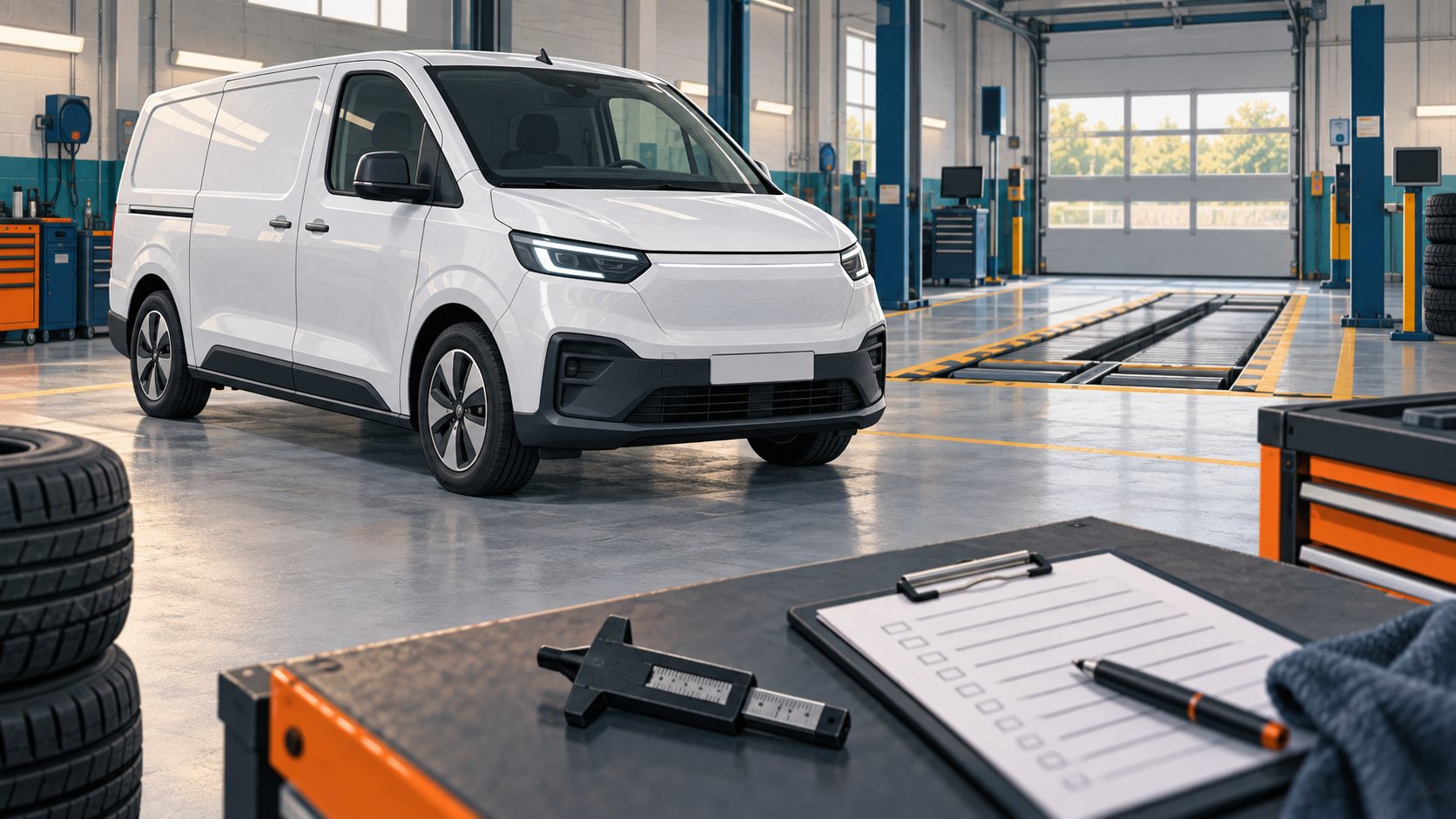
This matters when a van, a long-wheelbase vehicle or an unusually loaded car takes the place of a familiar hatchback. Do not guess at a lifting point because it looks solid. Check the vehicle information and the lift's capacity. If the combination is outside the lift's capability, use suitable equipment instead.
Balance can change during a job. HSE highlights removing a heavy engine or gearbox, and even the force used to free a seized bolt, as things that can alter stability. [1][2] Plan that work before the vehicle is high in the air. If the centre of gravity may move, review the lifting arrangement with someone competent in that equipment and job.
Make the first lift a test
HSE advises raising the vehicle only a short distance first. Check that the arms have locked and the pads are properly placed before taking it to working height. For a two-post lift, HSE's wider motor vehicle repair guidance also says the arm locks should be fully engaged and secure. [1][2]
This is the moment to stop if the car moves oddly or a pad is not where it should be. Lower it and correct the setup. Do not let an appointment running late turn a doubtful first lift into someone working beneath it.
Know what the examination does
The Lifting Operations and Lifting Equipment Regulations 1998 (LOLER) require vehicle-lifting equipment at work to be thoroughly examined by a competent person at the appropriate interval. HSE's motor vehicle repair guide explains an important distinction: six months is required if a person is elevated inside a vehicle on the lift. Where people routinely work beneath raised vehicles, HSE says a risk assessment should conclude that six months is appropriate. Six-monthly examination is common industry practice. [3]
HSE's shorter working-under-vehicles guidance recommends a thorough examination of vehicle lifts every six months and a written Report of Thorough Examination. It also says the examination does not replace regular checks and maintenance. [2] So check the latest report, its due date and any defects or actions. Ask the competent examiner about the interval for your lift and how it is used. Do not turn the recommendation into a claim that every lift has the same legal six-month rule in every circumstance.
Installation is part of the picture too. HSE says the floor and fixings must meet the lift manufacturer's specification, and that a competent person should test an installed lift before use and issue a certificate. [2] If the installation history or floor suitability is unclear, get specialist advice before relying on it.
What I would do this week
- Ask each lift user to check arm locks, pads and controls before the first job of the day.
- Put the lift maker's capacity and vehicle positioning instructions where the team can find them.
- Use the correct vehicle lifting points and pause at a low height to check stability.
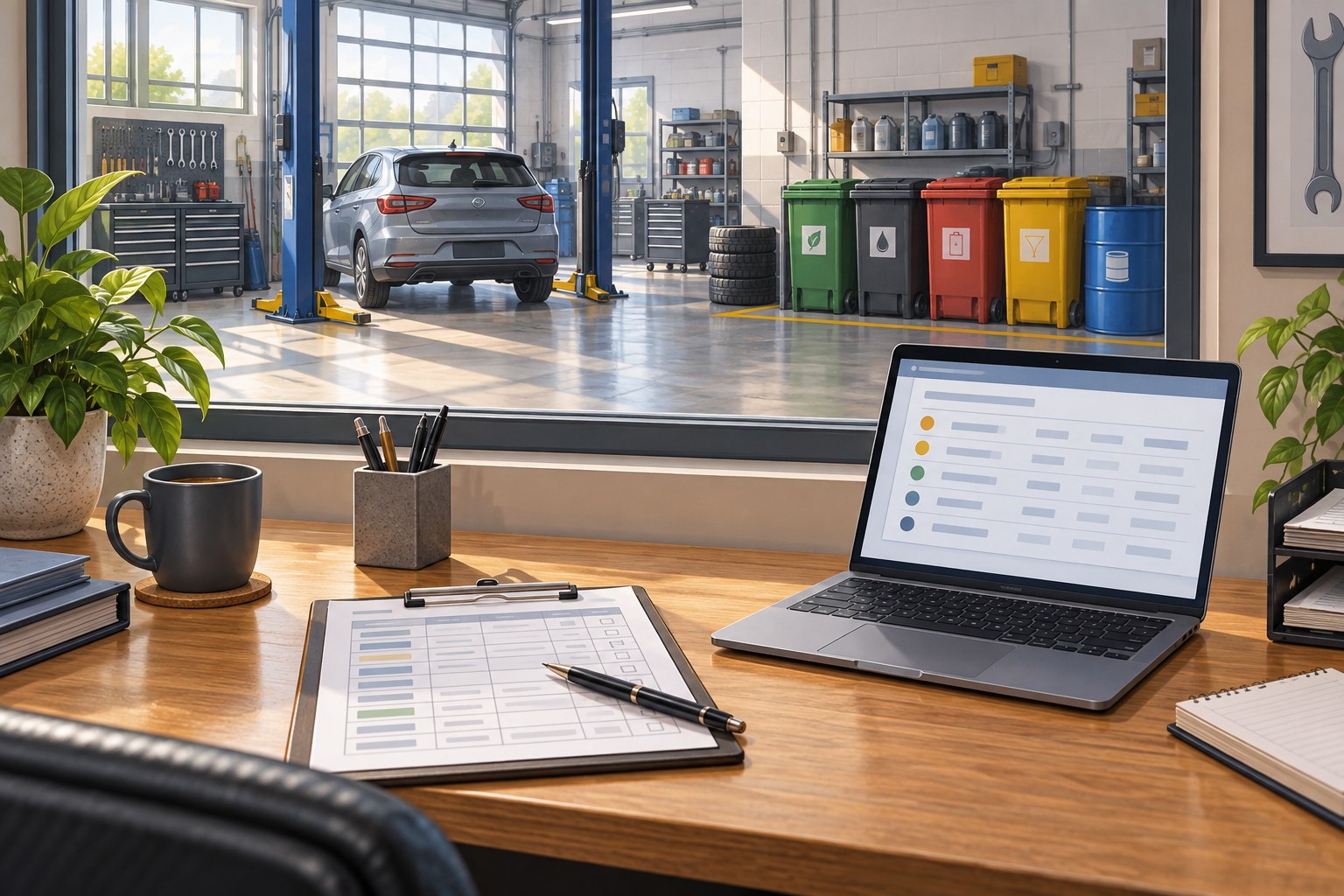
- Check the latest thorough examination report and deal with any recorded defect or overdue action.
- Make it easy to label and stop using a lift when a safety-critical fault appears.
My view: a safe lifting routine should be boring in the best way. Everyone knows what to look at, everyone can call a halt, and no one treats the certificate as a substitute for checking the machine in front of them.
Checked on 23 September 2026. Follow the specific lift and vehicle manufacturers' instructions and seek competent advice for an uncertain setup. The illustration is conceptual, not an example of a certified arrangement.