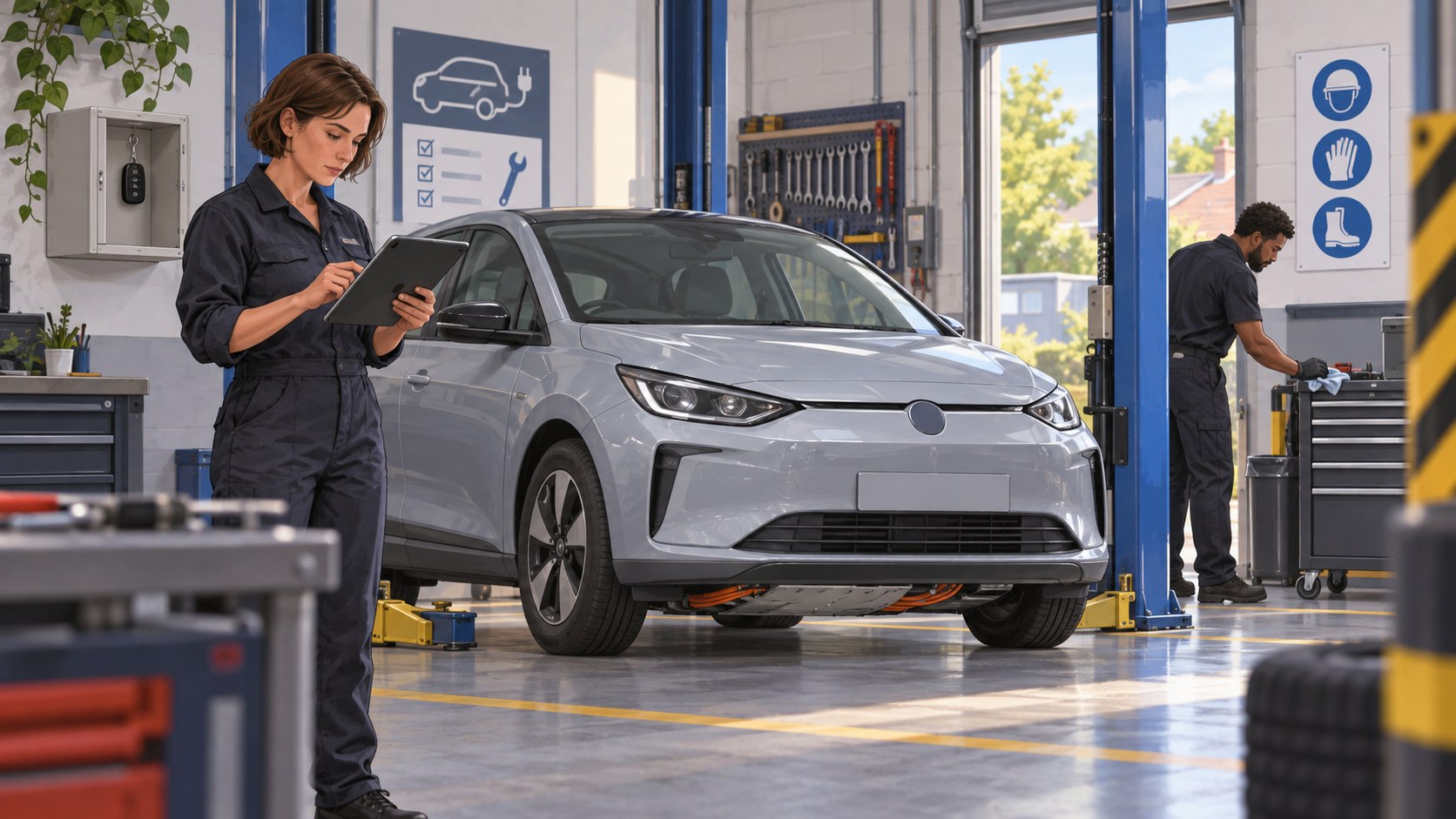
A customer books an electric car for a job that sounds familiar. The task is not on the high-voltage system, so can the team treat it like any other car? Not quite. HSE says electric and hybrid vehicles add hazards to normal repair work, including high-voltage parts, stored energy and unexpected movement. Some components can retain dangerous voltage even when the vehicle is switched off. [1]
This is not a new September 2026 rule. It is established safety guidance worth turning into a repeatable arrival check. The point is not that every technician must become a battery specialist before changing a tyre. It is that the garage must understand the job, the vehicle and the limits of its competence before work starts. [1][2]
A routine job is still an EV job
HSE separates work into four broad groups: lower-risk tasks such as valeting, incident response, repair that excludes the high-voltage system, and work on the high-voltage system itself. The skills needed depend on the task. Someone moving or cleaning a vehicle needs awareness of its particular risks; repair staff need greater competence, and high-voltage electrical work needs more again. There is no single blanket permission to work on every EV just because someone has handled one before. [1]
For maintenance that does not involve the high-voltage system, HSE says to consult vehicle-specific information from the manufacturer and relevant trade sources. Designs differ. A generic diagram or memory of the last model is not a safe substitute for the right vehicle instructions. [1]
Four checks before the spanners come out
First, identify the exact vehicle and the job boundary. Which parts of the car will the task reach? If it involves cutting, welding or panel work, find the high-voltage cable routes and take precautions before anyone disturbs them. Orange cabling is a useful warning sign, not a map of every hazard. [1]
Second, control the remote key. HSE advises keeping it away from the vehicle to prevent accidental operation or movement. For repair work, it says the key should be locked away with access controlled by the person working on the car. If the job needs the key, check that the vehicle is safe before retrieving it. A silent car can still move, so also think about other people in the bay. [1]
Third, look for damage to high-voltage cables and components before starting. If a vehicle arrives damaged or faulty, do not turn a routine booking into an improvised high-voltage repair. Reassess the job against the manufacturer's instructions and the competence and equipment available. HSE flags damaged batteries, harmful liquids and stored energy as additional risks. [1]
Fourth, follow the manufacturer's isolation instructions where the task requires it. HSE's guidance for non-high-voltage repair says that, unless a specific task requires the vehicle to be energised, the high-voltage battery should be isolated or disconnected in line with those instructions. That is not permission to have an untrained colleague pull a service disconnect. If the work reaches the high-voltage system, isolation, lock-off and proving dead by testing are a different, more demanding procedure for competent people using suitable equipment. [1]
What I would put on the job card
My practical move would be a short EV arrival prompt: exact model and manufacturer information found; job boundary agreed; key controlled; visible damage checked; isolation decision and responsible competent person recorded. If any answer is uncertain, pause and get the right information or specialist help before the work changes scope. That checklist is my suggestion, not an HSE form. [1][2]
There is an opportunity here as well as a hazard. A garage that can explain its safe process plainly can take on the right work with confidence, and decline or refer work it is not equipped to do. The awkward moment is not saying "we need to check". It is discovering halfway through a supposedly ordinary job that nobody did. [1]