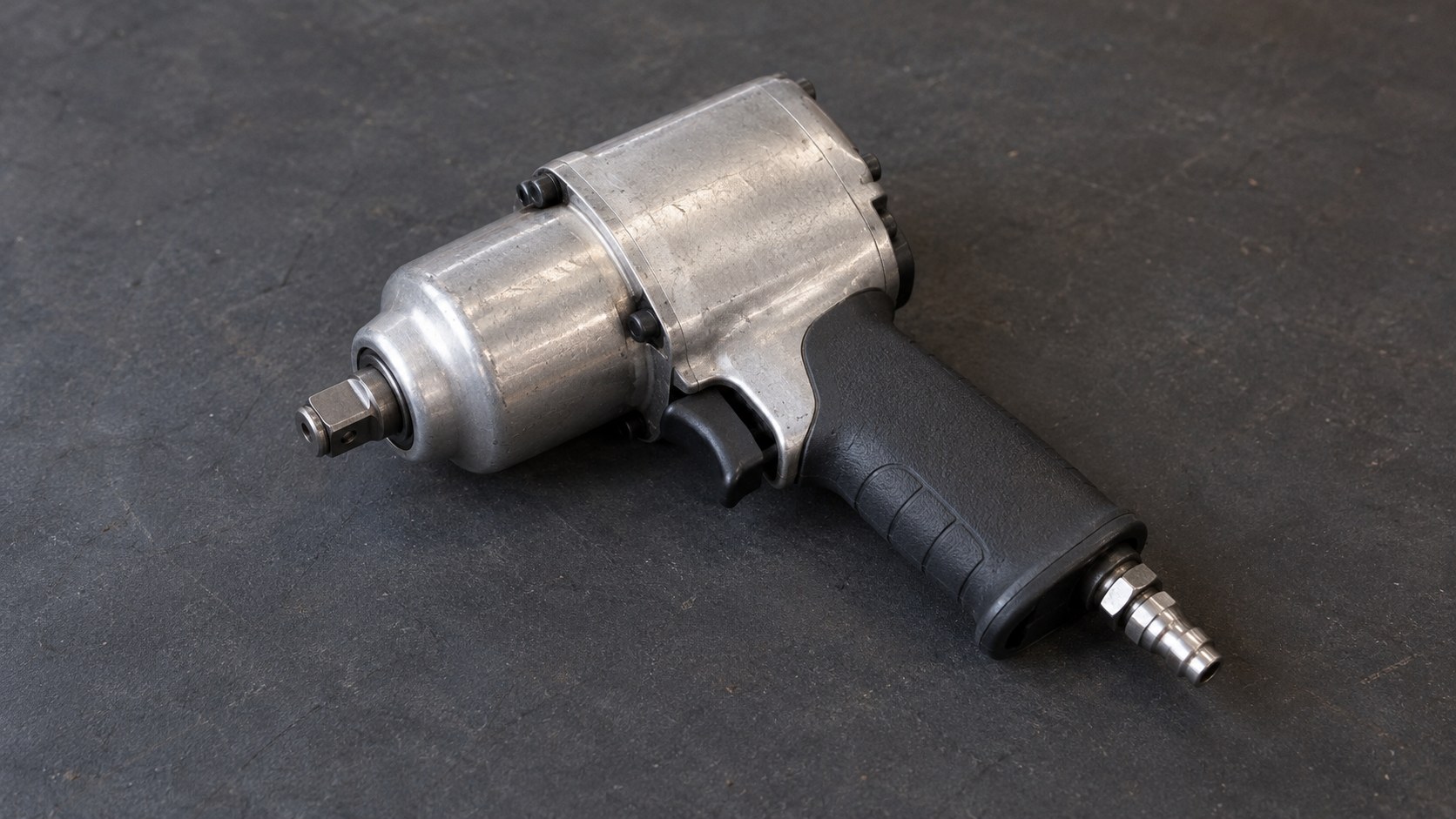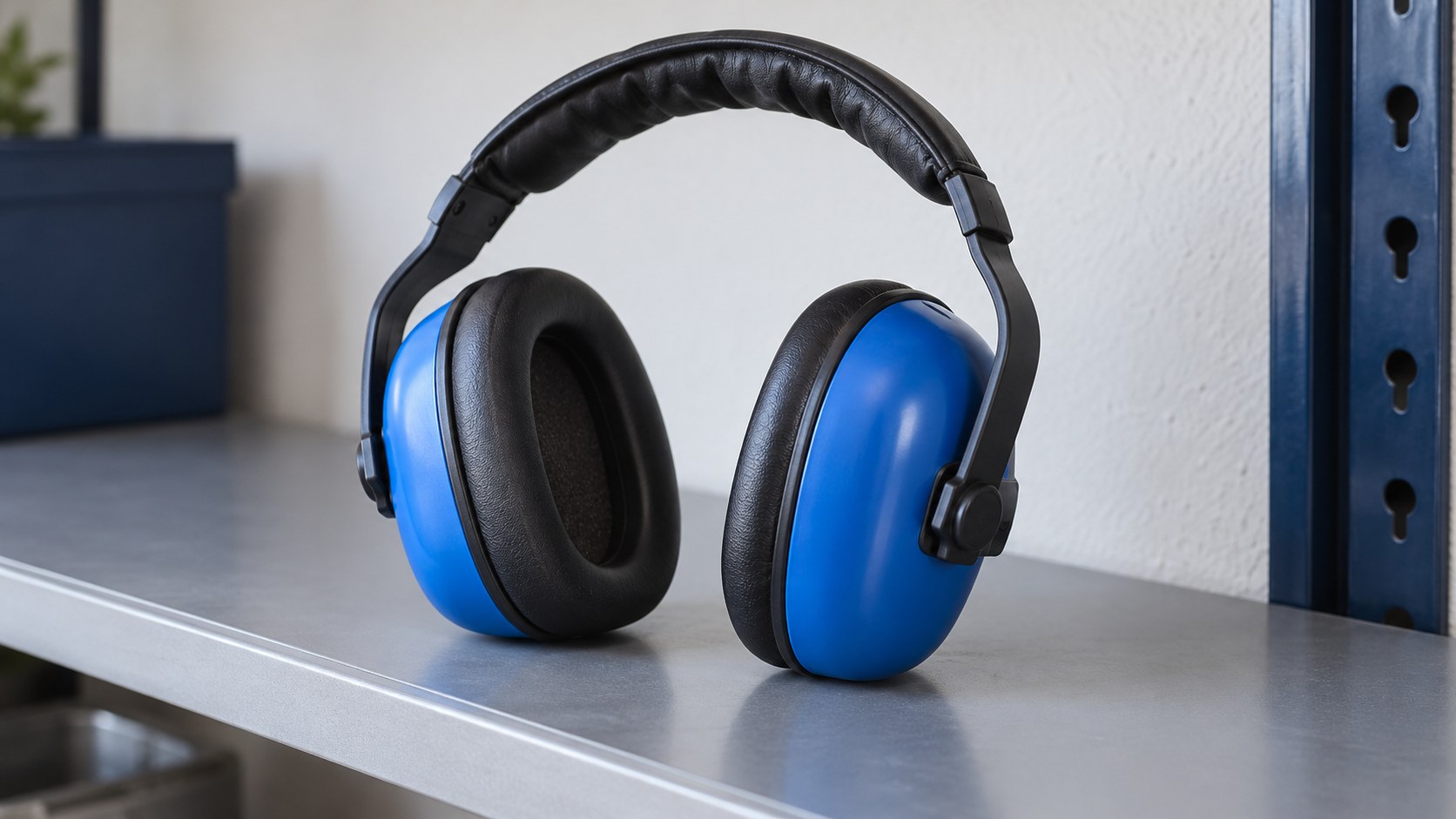
The earmuffs are there. The hook is there. Somebody has even put the hook somewhere sensible. Lovely. Now for the awkward question: what happens when the noisy job actually starts?
HSE's motor vehicle repair guidance warns that excessive noise can cause irreversible hearing damage. It identifies body-panel work and pneumatic tools as particular concerns. It also warns that noise from one person's job can expose people nearby. The risk does not stop neatly at the edge of the job card. [1]
This is an established workshop issue, not a new October law. The Control of Noise at Work Regulations 2005 came into force for industry in Great Britain in April 2006. I am writing for garage employers in England, Scotland and Wales, particularly where repair or bodywork creates noisy tasks. Northern Ireland has its own framework. [2]
My view: issuing protection is the start of a system, not proof that the system works. A useful review follows the task, the person and the equipment. It does not begin and end with counting what is hanging on the wall.
Start with the noise, not the shopping list
HSE says hearing protection must not replace technical and organisational noise controls. Its garage guidance points to quieter equipment and separating noisy work, among other ways to reduce exposure. If you need to raise your voice to speak to someone two metres away, that is a warning that the noise may be harmful, not a measurement of compliance. [1][3]
I would begin with a short list of the jobs that make conversation difficult. Ask the people doing them which tools, working positions and neighbouring tasks matter. Record how long the work lasts and who else is nearby. This is my suggested starting exercise, not a substitute for a competent noise assessment.
Do not turn the conversation test into a diagnosis or use it to declare a quieter-sounding job safe. It is a prompt to look properly. If the task or equipment changes, give the assessment another look rather than assuming last year's arrangement still describes today's workshop.
HSE distinguishes exposure action values of 80 and 85 dB(A), based on daily or weekly average exposure, from the 87 dB(A) exposure limit, which takes hearing protection into account. These are not interchangeable numbers and are not simply the loudest moment shown on a phone screen. [2]
I would use the assessment to decide which controls, protection and zones are needed. A shopping basket full of impressive-looking PPE cannot answer that question on its own. Neither can a bargain tool's advertising photograph.
Check condition and fit before the job
HSE's hearing-protection guidance calls for clean, serviceable equipment, undamaged earmuff seals, maintained headband tension and no unofficial modifications. It also requires instruction in correct use and warns about interference from hair, hats, spectacles and other items worn around the ear. [3]
My suggested check happens in a quiet place before exposure, not while someone is trying to finish a noisy task. Look at the actual pair issued to the person. Is a cushion damaged? Is the band loose? Is there an improvised repair? Can the person obtain the appropriate replacement without hunting through a cupboard?
Use the manufacturer's instructions for that equipment. I am not offering a universal fitting technique or saying that a visual inspection certifies protection. If something is damaged or unsuitable, resolve it before the exposure. The answer is not to carry on because the replacement order should arrive on Tuesday.
Ask the person to show how their protection is worn with the other PPE the task needs. Do not simply tell them to remove necessary eye or respiratory protection to make the earmuffs sit better. Resolve the combination as a whole. A comfortable-looking arrangement is not automatically an effective one.
HSE says correct fit and use matter, and that removing protection briefly during harmful noise exposure considerably reduces its benefit. Training should cover storage, damage reporting and obtaining replacements, not only how to put it on. [3]
I would ask one practical question at the end: "If this pair is damaged tomorrow morning, what do you do?" An answer involving a named person and an accessible replacement is more useful than "I suppose someone orders them".
Enough protection must still allow safe working
HSE advises avoiding protection that reduces sound at the ear below 70 dB because it can interfere with communication and warning signals. Selection should match the noise and working environment, not simply maximise the rating on the packet. [3]
My view: "the strongest pair we could find" is not a specification. Keep the assessment and the manufacturer's performance information together, and get competent help where the selection is uncertain. Do not treat a product's single-number rating as a guarantee for every workshop task.
Plan how people will communicate safely while protection is required. Review whether necessary warning signals can be detected with the chosen arrangement. Do that through a controlled assessment, not by creating a surprise hazard or sending a vehicle towards someone to see whether they notice.
For example, I would discuss the stop signal before a noisy task begins and confirm what the people involved understand it to mean. That is a suggested planning conversation, not a replacement for the workshop's assessed procedures. If the answer is "take the earmuffs off when somebody shouts", the arrangement needs another look.
Keep protection available before people enter an area where it is required. Visitors and colleagues need to understand the arrangements too. A good location for supplies is useful; consistent use and a workable procedure are the point.
Close the loop with hearing checks and action
HSE requires hearing health surveillance for employees likely to be regularly exposed above the upper action values, or at risk for other reasons, such as existing hearing loss. The programme should be overseen by an appropriately qualified occupational health professional. It is not an informal hearing test carried out by the garage manager. [4]
The guidance says employers should use the results and occupational health recommendations to review their risk assessment and controls. Employer health records and fitness-for-work advice are separate from confidential clinical records held by the doctor. [4]
I would finish today's review with named actions: who deals with damaged equipment, who checks fitting instruction, who resolves a warning-signal concern and who follows up the required occupational health arrangements. Record what will change and when it will be checked. Do not put private medical detail into a shared job-board note.
This need not become a grand new paperwork empire. Start with the actual noisy work and the gaps you find. Fixing an inaccessible supply point is one kind of action; commissioning competent assessment is another. Be clear which problem each action is meant to solve.
My view is simple: a tidy hook is good housekeeping, but it cannot protect anyone's hearing. The useful evidence is quieter work where practicable, suitable equipment, correct continuous use where required and follow-up when the checks reveal a problem. Review the system, not just the purchase receipt.