There is a satisfying moment when an online assessment says you have passed. Close the tab, put the kettle on, carry on testing. Tempting, isn't it?
For MOT annual training, I would add one more task before the kettle: check the result is where DVSA expects it to be. A successful assessment and a correctly recorded pass are not quite the same thing. [1]
This is not a new October rule or a surprise extra course. It is a halfway-through-the-year nudge for MOT testers and garage owners in England, Scotland and Wales. The current training and assessment year is 1 April 2026 to 31 March 2027. [3]
My view: getting it organised now is much nicer than discovering an unfinished task while you are also trying to organise next week's bookings.
Start with the tester, the group and the remaining work
Existing MOT testers must complete annual training and pass an assessment by the end of March. The minimum is three hours of training for each vehicle group they test. New testers begin their annual training requirement from the April after their demonstration test, so check that timing rather than assuming every newcomer has the same starting point. [1]
Group A covers classes 1 and 2. Group B covers classes 3, 4, 5 and 7. Test both groups? You need at least six hours, the relevant topics for both and two annual assessments. Training must be recorded on the MOT testing service. DVSA warns that failing to record it can lead to suspension for the tester and the business. [2]
My suggested first step is a short conversation, not a grand training presentation. Ask each tester which groups they cover, what they have already completed this year and what is still outstanding. Do not turn a vague "I'm nearly there" into a tick in the diary.
Give the remaining work an owner and a booked slot. If that owner is the tester, agree when the garage will make time available. A diary entry that simply says "training" is easy to shuffle; one that names the person, topic and next check is harder to lose.
Use this year's topics, not last year's memory
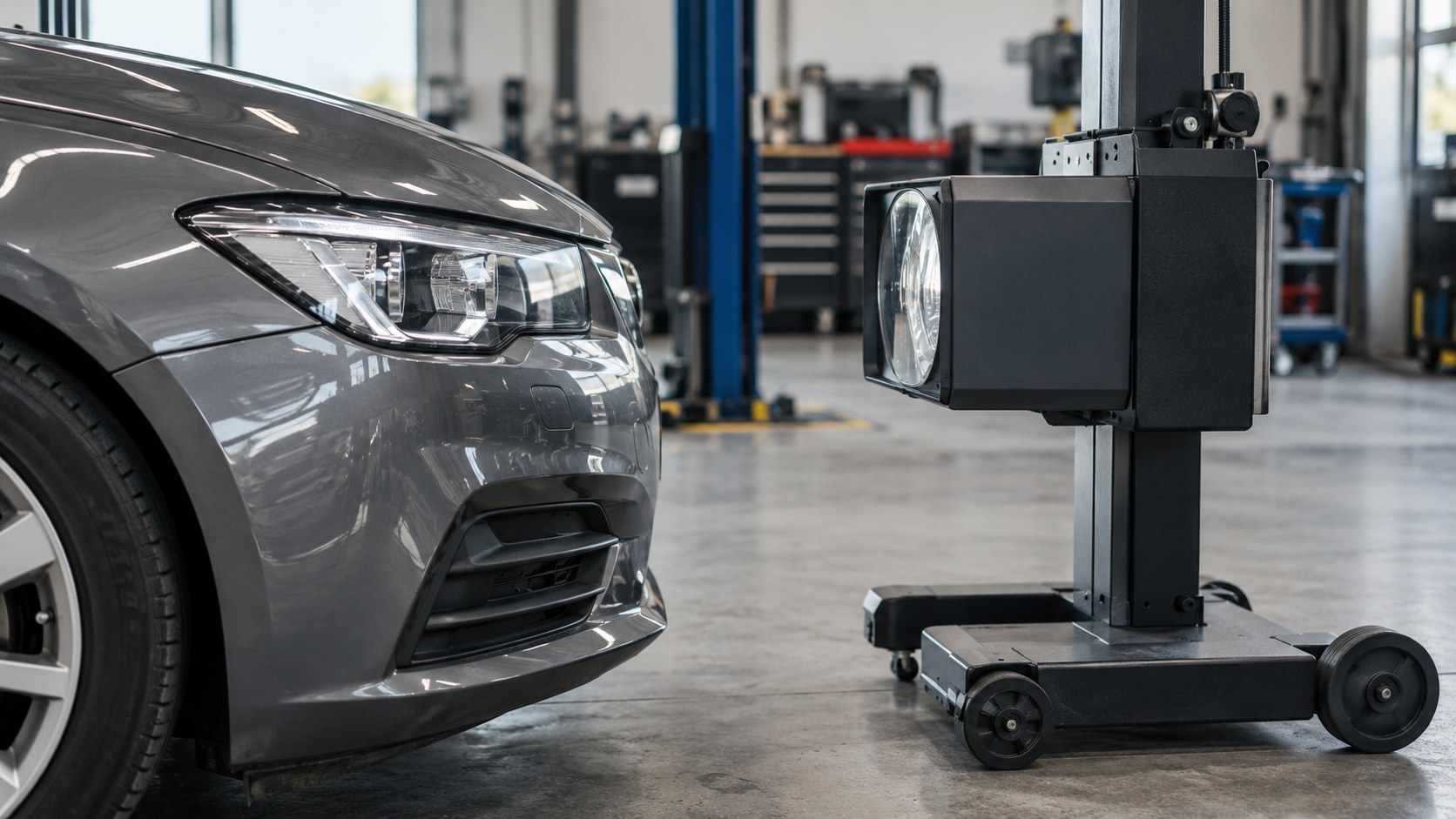
DVSA's group B topic page, updated on 1 April 2026, sets out the current assessment mix: four questions on lamps, reflectors and electrical equipment; five on the testing guide; five on braking; twelve on the inspection manual; and four from previous training years. The lighting examples include headlamp aim, conversions and equipment setup. Brake topics include components and testing procedures; the wider manual topics include tyres, suspension and emissions. That is a study map, not the full syllabus reproduced here. [3]
My practical suggestion is to pick a point where somebody is relying on habit and follow it back to the current official document. Headlamps make a useful starting point: can the tester explain where the relevant instruction lives, rather than just describe what they usually do?
Use a quiet training discussion to separate three things: the inspection requirement, the equipment instruction and the workshop habit. If those get mixed together, write down the question and resolve it from the appropriate current guidance before treating the habit as the answer.
That is not permission to improvise a test method. It is a way to make learning specific. Avoid collecting random quiz answers without understanding the condition that makes each answer right. A remembered answer to a different vehicle or circumstance can be impressively confident and still unhelpful.
You can study official manuals, special notices and the testing guide, discuss learning with other testers, demonstrate it or learn from an experienced tester. A provider course is another option, not the only route described by DVSA. [2]
For the garage's own working notes, I would capture what question was tackled, which source resolved it and what the tester will check next time. Those are my suggested learning prompts, not a claim that a separate paper sheet replaces the required MOT testing service record.
Protect the assessment slot, then check the upload
The online assessment can be taken after the training, at home or through a provider. It has 30 multiple-choice questions and usually takes about an hour. Notes and the relevant inspection manual can be used. For the year ending 31 March 2027, the pass mark is 80%. [4]
My advice is to give that hour the same protection you would give a booked job. Not reception cover, not "answer this customer while you're there", and not squeezed between two interruptions. Check the provider's arrangements beforehand and make sure the tester has the correct materials available.
After a pass, open the tester's MOT testing service profile and look in the Annual assessment certificates section. If the result is missing or wrong, contact the assessment provider. DVSA says a pass that has not been uploaded by the end of the training year leads to suspension of the tester's status. [1]
That is the important distinction for the owner: "passed" is progress; "the correct pass is visible in the profile" is a separate check. I would put both on the plan and only mark the second complete when it has actually been checked.
Do not assume a suspension is fixed by showing somebody an email. DVSA's assessment guidance explains the route back, including the relevant training and assessment and a demonstration test request. Follow that process if needed, rather than inventing a shortcut. [4]
Make the next check boring, in the best possible way
My proposed October routine is straightforward. First, check each tester's applicable year and vehicle groups. Next, compare completed learning with the current topics and book what remains. Then confirm the required training is recorded, arrange the assessment and check the uploaded pass.
Keep the discussion proportionate. The garage needs a reliable completion plan, not a public league table of people's scores. Ask the tester to confirm the relevant record through the normal authorised arrangements; do not start passing account passwords around to make checking convenient.
If something is outstanding, record the next action and a follow-up date while there is still room to deal with it. My preference would be to set an internal target comfortably before March, explicitly labelled as the garage's planning target rather than a replacement for DVSA's deadline.
The opportunity here is useful learning as well as an administrative tick. A tester who can find and explain the current instruction has gained something the workshop can use tomorrow. A garage that also checks the record has finished the job properly. That is worth a coffee.