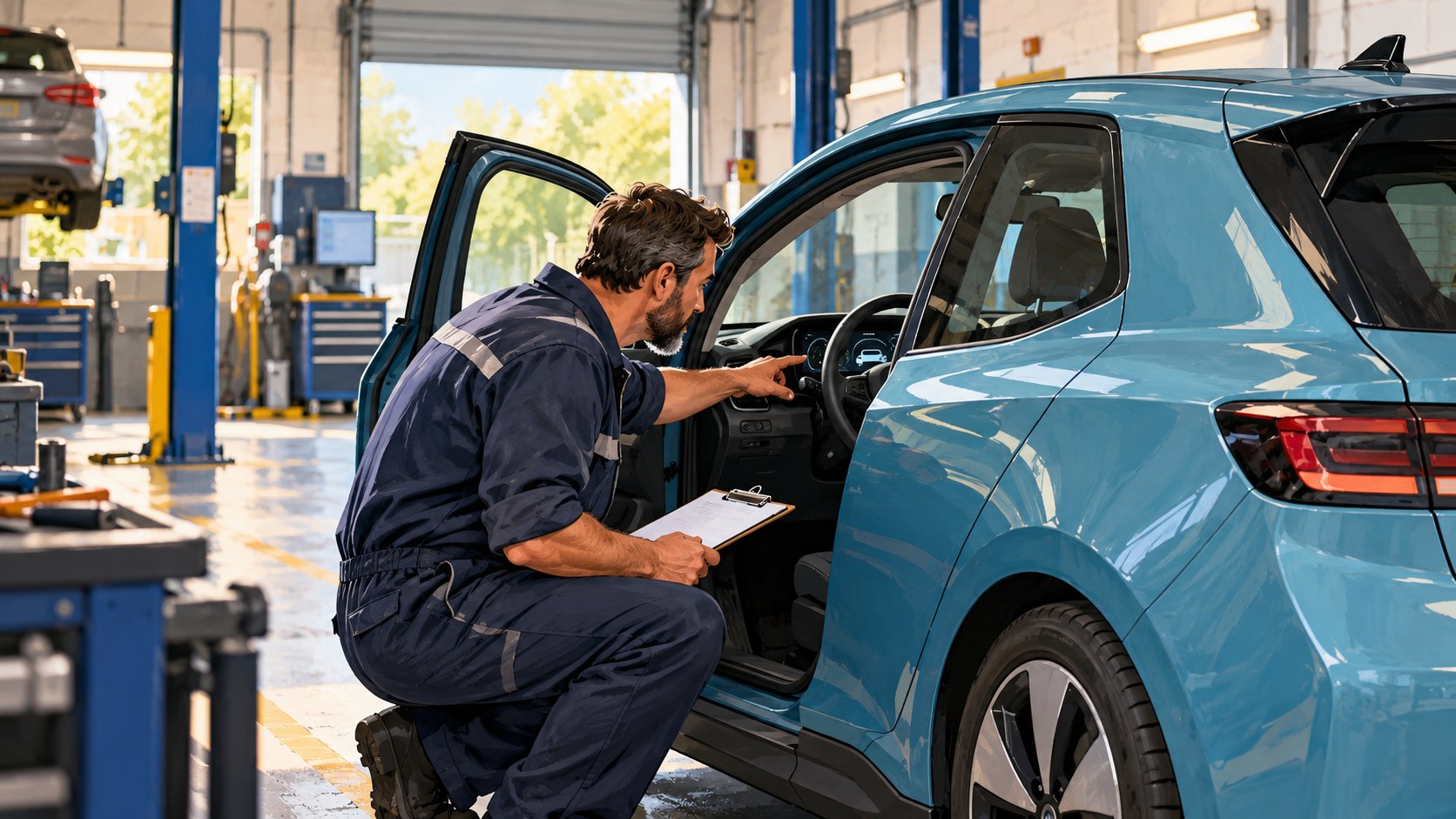
If a customer asks whether their two-year-old electric car will need a special garage visit for the future mileage tax, the short answer is no routine extra visit under the government's revised plan. HM Treasury's consultation response, updated on 13 July 2026, says it will not proceed with the proposed requirement for under-three-year-old cars to attend separate mileage checks. The tax itself, electric Vehicle Excise Duty or eVED, is planned from April 2028. It is not a new MOT task this September. [1]
What changed after the consultation?
The original idea would have brought some cars that are not yet due an MOT into the garage just for a mileage reading. Respondents raised the extra work, cost and pressure this could put on motorists and the MOT network. The government chose a different route for those younger cars: at each Vehicle Excise Duty renewal, the keeper will provide an odometer reading and an estimate for the year ahead. When the car later has an MOT, its verified reading can be used to reconcile those estimates. [1]
There is an exception worth keeping in the sentence, not hiding at the bottom. The response says DVLA will be able to require an official check outside the MOT cycle where there is reasonable suspicion of fraud or non-compliance, including for an under-three-year-old vehicle. It expects a small number of ad hoc checks through the MOT network. That is not the same as booking every young EV for an annual tax-only check. [1]
Where the MOT garage comes in
For vehicles already subject to MOT testing, the government's plan uses the existing MOT network for mileage verification. It says it will keep working with garages on systems, guidance, costs and the handling of suspected problems, including a non-functioning odometer. Those details are still being developed. The response says draft legislation was published for technical consultation and that the next phase includes finalising the law and DVLA systems. A garage should not sell a new eVED checking service or buy equipment on the assumption that a final workflow already exists. [1]
For now, the current MOT record rules are the ones to follow. DVSA's testing guide says a station can amend the current odometer reading on its own test record only within 28 calendar days of test completion, and the new figure must be the reading seen on the day of the change. An owner's estimate for future tax is not a reason to rewrite yesterday's test reading. [2]
The planned charge covers UK-registered fully electric and plug-in hybrid cars at launch. The Treasury response says vans, buses, coaches and HGVs are outside the initial scope. Do not confuse this tax design with the separate class 7 MOT rules for heavier zero-emission vans. [1]
What I would tell the front desk
Keep the answer plain: no routine extra mileage appointment for a car below MOT age is planned, and no eVED garage task is in force now. Carry on recording MOT information under today's rules. If a customer has a question about their future tax estimate or payment, point them to forthcoming DVLA guidance rather than improvising a tax calculation at the service desk. The government says it will publish tools and guidance for keepers and continue talking to garages before implementation. [1][2]
My view: this is a welcome bit of restraint. The garage already has enough jobs without becoming a second tax counter. The detail to watch is how DVLA handles the occasional official check and what support or payment MOT sites get for any added work. Until that is settled, the sensible purchase order is a pencil, not a new machine. [1]