A proposal, not Monday's new permission slip
The Department for Transport published its GB type-approval consultation on 18 August. It applies to England, Scotland and Wales; responses closed on 29 September 2026. The landing page still describes proposals to be brought forward through legislation. It is not a new diagnostic-access rule already in force. [1][2]
The repair-information section proposes alignment with recent EU amendments, including conditions for independent repairers' access to on-board diagnostics, or OBD. It would omit SERMI references. SERMI is the EU system for checking people seeking security-related repair information. DfT says GB did not adopt it and manufacturers currently decide how to check trustworthiness for that data. [2]
That distinction matters. A proposal about access is not proof that every existing scanner has stopped working. Nor is a consultation closing date a deadline to buy equipment. I would want vehicle-specific evidence before telling a customer their car has suddenly become a dealer-only job.
Security and access are not opposites
DfT describes existing manufacturer obligations to provide repair information on an equal basis. It proposes updated conditions intended to accommodate proportionate cybersecurity while retaining diagnostic access. Its stated next step is a response summary within three months of closing, with legislation subject to stakeholder views and ministerial approval. That is an aim, not a guaranteed start date. [2]
The EU text behind the proposal is worth reading rather than guessing at. Its Appendix 4 addresses manufacturer and tool-maker arrangements, credentials and access procedures. It also limits suspension of access: exceptional cybersecurity incidents require necessary, proportionate restrictions and notification to the approval authority. That authority can require restoration. These are provisions in the EU comparator, not a GB procedure this article tells you to invoke today. [3]
My view: protect the car from unauthorised interference, absolutely. But a legitimate independent repairer should also have a clear route to do the job. The useful question is how that route works in practice, not whether a sales leaflet contains a reassuring padlock.
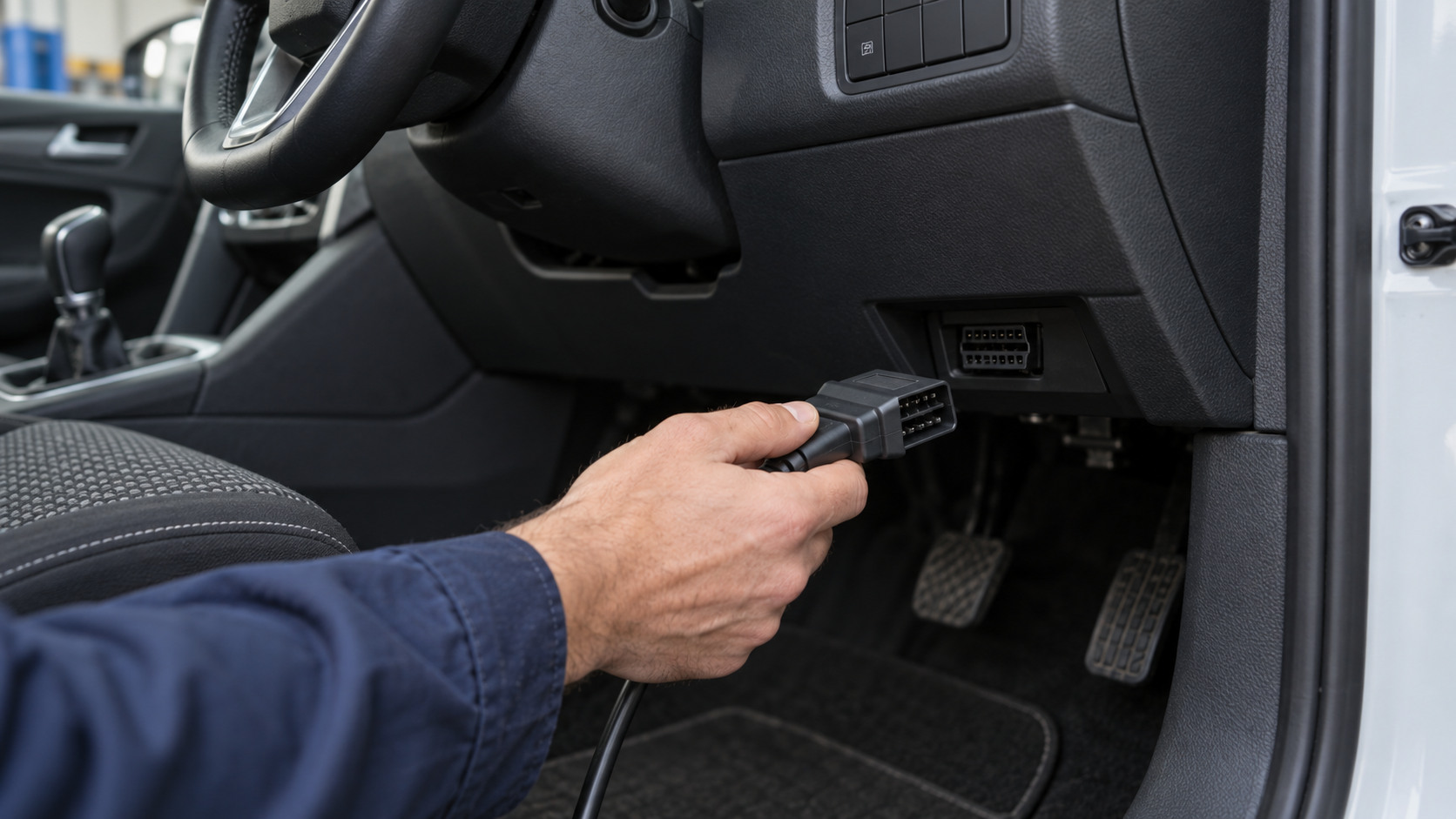
The generated photograph above illustrates the physical connection only. It does not show a successful login, a supported function or a manufacturer-approved access arrangement. A connector fitting a socket is not the evidence I would use to buy a tool.
Turn the worry into three useful checks
First, pick jobs you actually sell. I would list a few representative vehicles and separate reading faults from the other operations the garage needs. Ask the tool supplier to explain support for each exact model and function, not simply whether the product is described as suitable for modern cars. A vague yes is not much use when the car is already occupying a bay.
For a proposed purchase, my questions would be practical: what account is needed, who supplies it, what does it cost, and how does the technician obtain access? Which operations are supported now? Which are promised later? Ask for those answers in writing. I would not treat a future software promise as demonstrated capability, or ask someone to bypass an access control to prove a point.
Second, make an access problem describable. My suggested internal record is the vehicle model and year, requested operation, tool/software version, error wording and time lost. Keep customer identifiers and credentials out of public screenshots or supplier group chats. A concise, private support case is more useful than a photo of an unexplained error captioned "everything is locked now".
Before using that record as evidence of a policy problem, I would ask the supplier to distinguish a subscription issue, unsupported function, connection fault and access refusal. That is a troubleshooting request, not an assumption about the cause. Keep the answer with the job record so the next technician is not starting the same conversation from scratch.
Third, watch the actual GB outcome. Bookmark the DfT page and read the eventual response and legislation before changing workshop policy. I would look for the final access conditions, vehicle scope, dates and route for challenging a refusal. Do not lift a date or process from the EU text and quietly relabel it British.
For customers, I would keep it equally plain: "We need to confirm access for this operation on your vehicle before we promise the job." That is more useful than announcing that a consultation has closed their choice of garage.
My shopping advice for now: buy against verified work you need to do, not the most alarming interpretation of a proposal. Keep evidence of genuine access problems. The trade needs a workable repair route, and a cupboard full of panic-bought scanners is not a substitute for one.