I spent some time reading the Department for Transport's latest emissions consultation.
And I mean reading it.
Government documents have a habit of making fairly simple ideas sound like a gearbox full of loose bolts. So here is what I think garages actually need to know.
First: this is not a new law yet
That bit matters.
The consultation on in-use vehicle emissions in Great Britain closed on 6 September 2026. The Department for Transport envisages legislation in summer 2027 and proposes a six-month lead-in before it takes effect. Those are proposals, not a date for your diary in permanent marker. [1]
No need to panic. But if your garage handles DPFs, EGR systems, AdBlue faults or ECU remapping, I would not ignore this either.
What are they trying to change?
A vehicle was built to meet a particular emissions standard. The department wants its emissions-control system to keep doing the job it was built to do while the vehicle is used on the road.
It says current in-use rules have not kept pace with newer Euro 5 and 6 light vehicles and Euro VI heavy vehicles. That is the gap it wants to close. [1]
And this is where garages come in.
DPF deletes are an obvious example
Most mechanics know this one already.
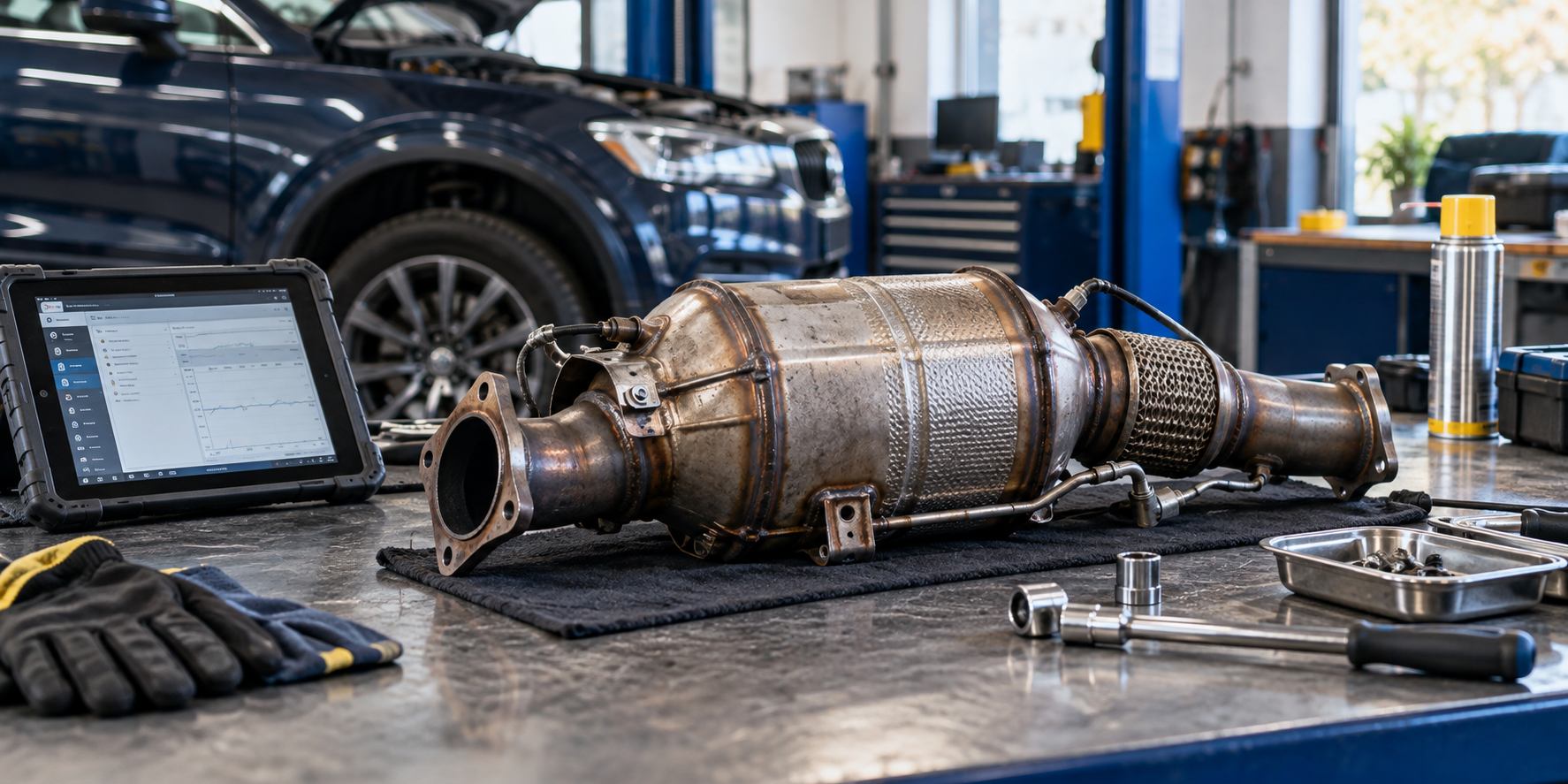
Where a DPF was fitted when a diesel vehicle was built, removing it is already a problem. MOT testers check components that are visible and identifiable; missing, obviously modified or defective emissions-control equipment, and evidence of DPF tampering, are major defects. [2]
Government guidance says DPF removal will almost invariably make the vehicle illegal for road use. [3]
So this is not suddenly becoming an issue in 2027. The proposed change aims to make the wider in-use emissions rules clearer and easier to enforce. And it goes beyond the filter.
AdBlue, EGR and software are in the picture too
The consultation specifically names DPF and petrol GPF deletes, catalytic converter removal, AdBlue/SCR manipulation and EGR manipulation. It also discusses ECU remapping. [1]
That last bit matters. You can leave the hardware looking perfectly respectable and still change how the emissions system works through software.
Imagine a customer arrives with an AdBlue fault. The proper repair is expensive. Somebody offers to code the system out for a fraction of the price.
Mechanically convenient? Perhaps. But the proposal looks at the result of a hardware or software change: does the vehicle still meet the emissions requirements it was built to meet? [1]
That gives you a useful workshop question:
Am I repairing this emissions system, or am I making it stop doing its job?
What if a change was accidental?
I had to read this part twice.
The department proposes not to distinguish deliberate from unintentional modifications where they result in excess emissions. It says the environmental effect is the same and intention can be difficult to prove. But it is also consulting on exemptions, so the final wording matters. [1]
I can see why garages may feel uncomfortable. You will not always know the emissions consequence of every aftermarket part or software change.
My practical view: keep a useful job record. Not a 40-page policy. Just what you found, what you recommended, what the customer chose, and what you actually did. That is sensible record-keeping advice, not a new legal requirement created by this consultation.
Four easy ways to prepare
I would not redesign the workshop around legislation that has not been passed. I would do four smaller things.
1. Check what you advertise
Search your website, Google listing and social pages for “DPF delete”, “AdBlue delete”, “EGR delete” and “emissions delete”. If you do not offer these services, fine. If you do, you know what to review as the proposal develops.
2. Ask whoever does your remapping
Many garages use a subcontractor for ECU work. Ask them plainly: “Do any of your maps disable emissions-control systems?” You should know what is being done to your customer's car.
3. Record the repair decision
If a car arrives with an emissions fault, put it on the job card. For example:
AdBlue system fault diagnosed. Customer advised of recommended repair. Customer declined. No emissions-system modification carried out.
Much better than trying to remember the conversation six months later.
4. Repair rather than delete
DPF blocked? Diagnose why. AdBlue warning? Find the fault. EGR problem? Repair, clean or replace the component where appropriate.
Fix the system. Do not just make it disappear.
Could a garage be prosecuted?
Potentially. The consultation proposes using existing Road Traffic Act provisions on non-compliant vehicle use, alterations and unsuitable parts. Depending on the offence and circumstances, it describes fines from £1,000 to an unlimited amount after a successful prosecution. This is a description of the proposal, not a claim that every fault or repair attracts such a penalty. [1]
The department expects DVSA enforcement and says the likely focus is further “upstream”, on practices that create illegal emissions modifications. [1]
My reading? Businesses openly selling deletes may draw more attention than a garage carrying out proper diagnosis and repair. That is my inference, not a guarantee about enforcement.
My take
Most good garages are already doing the right thing: finding faults and repairing cars properly. But the grey area around software and emissions deletes is getting smaller.
You do not need a new compliance department. You do not need a 40-page policy.
Know what work you are doing. Know what your subcontractors are doing. Write it down.
And when you are fixing an emissions system, fix it rather than deleting it.
That is a pretty good place to start.
This article explains a consultation as at 20 September 2026. It is general information, not legal advice.