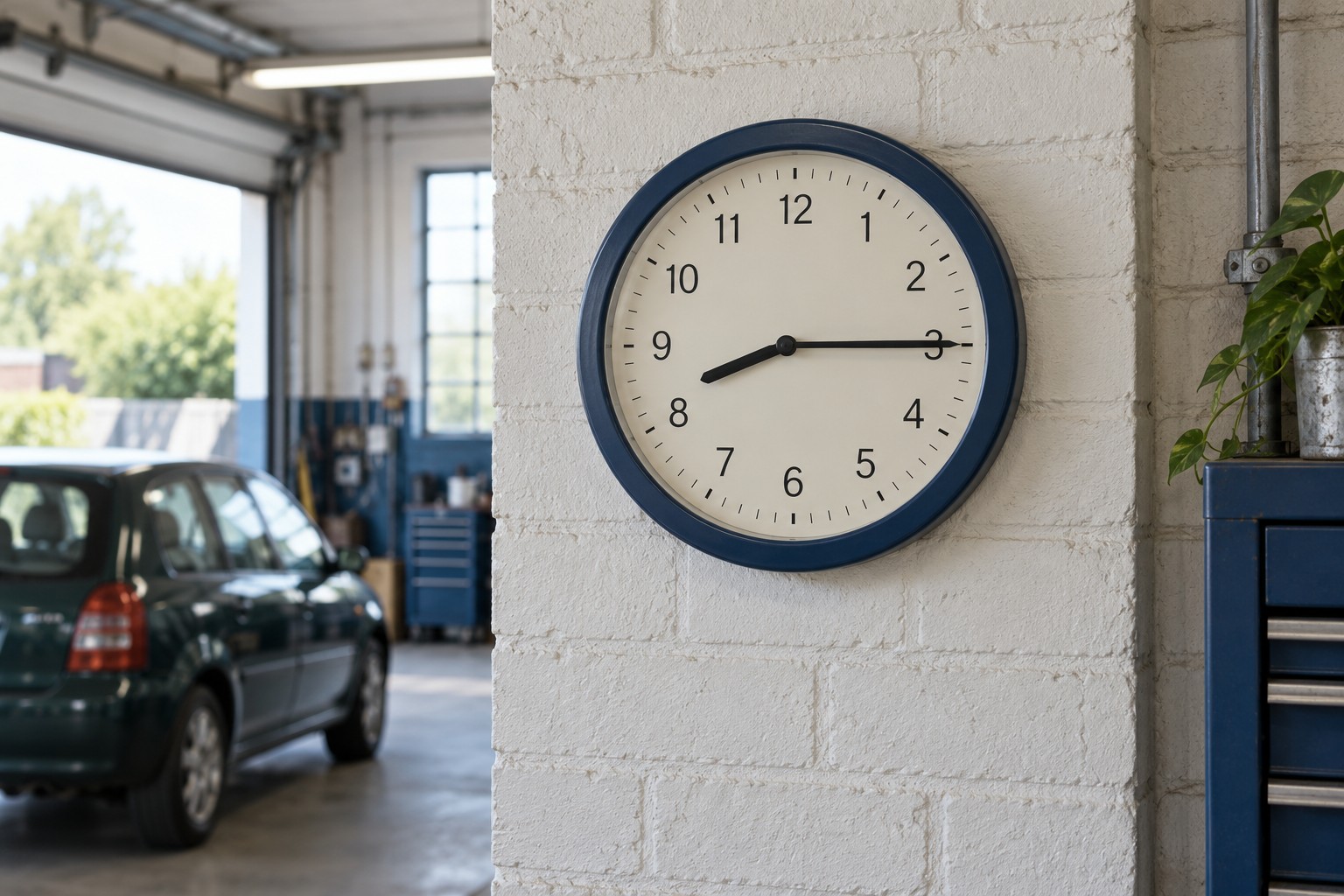
An eight o'clock appointment looks tidy until someone points out that the mechanic starts at nine on Thursdays. In this example, the garage is open and the bay is empty. Neither fact persuades a car to service itself. Cars remain disappointingly firm on that point.
MechanicO has a setting for the missing person: “Normal weekly availability” in Team. A garage can save recurring working days and start and end times for each mechanic or helper. Booking uses those shifts when checking an appointment date. It is an existing feature, worth introducing because opening the garage and having the right person available are separate questions. [1]
Yesterday's opening-hours article dealt with the garage's outside boundary. This setting deals with a particular person's part of the week. A late start, an early finish or a regular non-working day can belong to one team member without changing everybody else's hours.
Put the person's week into Team
Sign in to the garage's Booking workspace and open “Team”. Select the person from “Your team”. In their form, find “Normal weekly availability”. There is a row for every day from Monday to Sunday, with a checkbox and start and end time fields. [1]
Tick each day they normally work and enter the agreed start and finish. Leave a regular non-working day unticked. Then choose “Save team member”. Every enabled working day needs a valid start and end time. These are recurring shifts used when the scheduler checks a date, not a claim that the person has clocked in. [1]
I'd check the pattern with the person before saving it. Thursday might genuinely start later. Saturday might belong to another member of the team. A copied Monday-to-Friday pattern is convenient only when it is also true.
The shift must cover the whole appointment interval, including the service's Cleanup buffer. For an illustrative hour-long service with a fifteen-minute buffer, a 16:00 start needs the person available until 17:15. A shift ending at 17:00 does not cover it, even if the garage closes later. [1]
The same whole-interval check applies to a helper when the service requires one. A mechanic's longer shift cannot stand in for that helper's earlier finish. Booking still needs a suitable free bay and the required people, with the appointment inside opening hours.
Review the overlap, not just the head count
I'd use this when checking the week's staffing pattern. Count how many people are actually available together, especially at the beginning and end of the day. Three names on the team list do not necessarily mean three mechanics at eight in the morning.
For a regular change, I'd update the affected person's weekly rows and then look at the bookings that could be affected. Saving a shift pattern is not evidence that earlier appointments have moved, their allocations have changed or anyone has contacted a customer.
I'd also keep recurring shifts separate from one-off absences. This form describes the normal week. Changing every Tuesday because someone is away for one Tuesday could leave the wrong pattern behind for later weeks. A dated exception deserves a deliberate scheduling check of its own.
If an expected time is missing, I'd ask two questions before lengthening the shift: does the person really work then, and does the full job fit? Other commitments and resource requirements still matter. Giving the form a later finish cannot supply an extra pair of hands in the workshop.
There is no need to make everybody's week identical. Save the hours the people actually expect to work, then plan the first and last cars around that overlap. The empty bay can wait for the mechanic. The customer should not have to discover the gap on arrival.